In the digital-first world of today, businesses can no longer depend on traditional marketing methods alone to reach out to their target audience. Digital marketing has become one of the most powerful tools for businesses of all sizes with billions of people using the internet every day. Digital marketing allows brands, whether they’re a small local business or a multinational corporation, to connect with customers, build awareness, generate leads, and drive sales.
Digital marketing is the promotion of products, services or brands using online channels such as search engines, social media platforms, websites, email and mobile applications. As technology advances, it offers businesses an opportunity to connect with their audience in a meaningful and quantifiable way, and digital marketing strategies are becoming smarter and more creative every day.
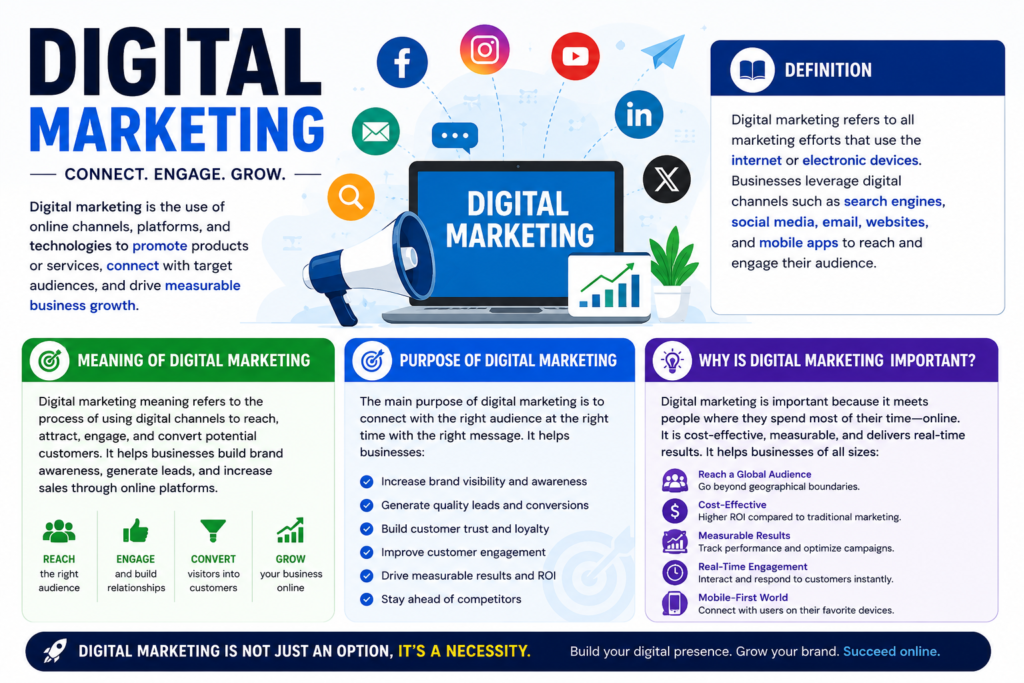
- What Is Internet Marketing?
Digital marketing is the marketing of products or services using digital technologies and the Internet. In the past, marketing was done through television, radio, newspapers and billboards. Digital marketing allows businesses to connect directly to customers through online channels.
Digital marketing is mainly used to attract potential customers, convert those potential customers into leads and finally convert those leads into loyal customers.Data-driven strategies enable companies to better understand consumer behavior, track campaign results, and optimize marketing efforts to drive better results.
Digital marketing encompasses search engine optimization (SEO), content marketing, social media marketing, email marketing, pay-per-click advertising (PPC), affiliate marketing, and more.
Why is digital marketing important?
“With the rise of smartphones, the increased availability of social media and the internet, this has changed the way consumers search for information and purchase decisions.” Consumers are researching products online, reading reviews, comparing prices and engaging with brands before buying.
Some of the reasons why digital marketing is important are:
- Global Scope
Digital marketing allows businesses to reach their customers all over the world without any geographical boundaries. Websites, social media sites and online advertising allow a company to market its products to international audiences.
- Cost-Effective Advertising
Digital marketing is a much cheaper alternative to traditional advertising methods. Small businesses can run targeted campaigns on tight budgets and still achieve impressive results.
- Tangible Results
One of the biggest benefits of digital marketing is the ability to measure performance. Businesses can see website traffic, conversion rates, click-through rates, engagement levels and return on investment (ROI) in real-time.
- Improved customer engagement
Digital marketing allows brands to directly engage with consumers. Businesses can use social media comments, emails, chatbots and online communities to connect more deeply with their audience.
- Greater Brand Awareness
A steady presence on the web through social media, blogs and search engine rankings helps a business build credibility and increase brand recognition.
Key Elements of Digital Marketing Search Engine Optimization (SEO)
SEO is the process of optimizing a website to enhance its visibility in search engines like Google. SEO ensures that when people search for a business’s products or services, the website ranks higher on the search results.
Here are the best SEO practices:
Keyword research
On-page SEO
SEO Link Building Technical
Local SEO Mobile optimization
An effective SEO strategy helps businesses generate organic traffic and attract potential customers without having to spend money on ads.
Content marketing 3.
Content marketing is the creation of valuable, relevant content to attract and engage audiences. The aim is to provide useful information that helps solve problems and build trust.
The most popular types of content marketing are:
Postings
Infographics Videos
E-Books Podcasts
Studies
Good content will improve SEO rankings and position a brand as a leader in the industry.
Social Media Marketing
Social media sites have become essential marketing tools for businesses. Social media platforms like Facebook, Instagram, LinkedIn, YouTube, TikTok, and X are great for brands looking to engage with audiences and sell products.
Advantages of social media marketing are:
More brand exposure
Customer Participation
Generation of web traffic
Generating leads
Create a community
Both organic content and paid advertising are ways for businesses to achieve their marketing goals.
Pay-Per-Click Advertising (PPC)
This is known as PPC advertising, or paying for clicks on online ads. Common PPC channels include Google Ads, Facebook Ads, Instagram Ads and LinkedIn Ads.
The benefits of PPC include:
Instant visibility
Reach your target audience
Budget adjustments
Quick Lead Generation
Performance tracking in detail
PPC campaigns work best with SEO and content marketing.
Email Marketing
Email marketing is still one of the most effective digital marketing channels. Companies utilize email campaigns to cultivate leads, provide updates, advertise products and establish long-term customer bonds.
Best practices for email marketing are:
Customized email
Automated campaigns
Audience lists segmented
Catchy Subject Lines
Clear call to action messaging
Email marketing is a high ROI activity that allows businesses to keep in direct contact with customers.
Benefits of Digital Marketing for Businesses
Enhanced Targeting
Digital marketing platforms provide advanced targeting options based on demographics, interests, behavior, location, and online activity. This ensures that marketing messages reach the most relevant audience.
Improved Conversion Rates
Through optimized landing pages, personalized content, and strategic advertising, businesses can increase conversion rates and generate more sales.
Real-Time Analytics
Marketing teams can monitor campaign performance instantly and make adjustments to improve results. Data-driven decision-making leads to better marketing outcomes.
Competitive Advantage
Businesses that invest in digital marketing gain an advantage over competitors who rely solely on traditional marketing methods.
Scalability
Digital marketing campaigns can be scaled according to business growth and budget requirements, making them suitable for startups and large enterprises alike.
Emerging Trends in Digital Marketing
The digital marketing landscape continues to evolve rapidly. Businesses must stay updated with the latest trends to remain competitive.
Artificial Intelligence (AI)
AI-powered tools are transforming digital marketing by automating tasks, analyzing data, and improving customer experiences. Chatbots, predictive analytics, and AI-generated content are becoming increasingly common.
Voice Search Optimization
With the growing use of voice assistants like Google Assistant, Siri, and Alexa, businesses are optimizing content for voice search queries.
Video Marketing
Short-form videos on platforms such as Instagram Reels, YouTube Shorts, and TikTok continue to dominate online engagement. Video content delivers information quickly and effectively.
Personalization
Consumers expect personalized experiences. Businesses are using customer data to deliver tailored recommendations, emails, and advertisements.
Influencer Marketing
Collaborating with influencers helps brands build trust and reach niche audiences. Influencer marketing remains a highly effective strategy across multiple industries.
Marketing Automation
Automation tools streamline repetitive marketing tasks such as email campaigns, lead nurturing, customer segmentation, and reporting.
Challenges in Digital Marketing
Despite its advantages, digital marketing presents several challenges:
- Increasing competition
- Frequent algorithm updates
- Data privacy regulations
- Ad fatigue among consumers
- Constantly changing trends
To overcome these challenges, businesses must focus on continuous learning, innovation, and customer-centric strategies.
Conclusion
Digital marketing has revolutionized the way businesses connect with customers. From SEO and content marketing to social media advertising and email campaigns, digital marketing offers countless opportunities for growth and success. Its ability to reach global audiences, deliver measurable results, and provide cost-effective solutions makes it an essential component of modern business strategy.
As technology advances and consumer behavior evolves, businesses that embrace digital marketing and adapt to emerging trends will be better positioned to thrive in the competitive online marketplace. Whether you are a startup, small business, or established enterprise, investing in digital marketing is no longer optional—it is a necessity for long-term growth and sustainability.
By implementing effective digital marketing strategies, businesses can build stronger customer relationships, increase brand visibility, and achieve their goals in the ever-changing digital landscape.
For More About – DM : Visit – HOME